Golang Worker Pool in a Controlled Way
Master the art of concurrent programming in Go by implementing efficient worker pools with controlled concurrency, proper resource management, and graceful error handling.
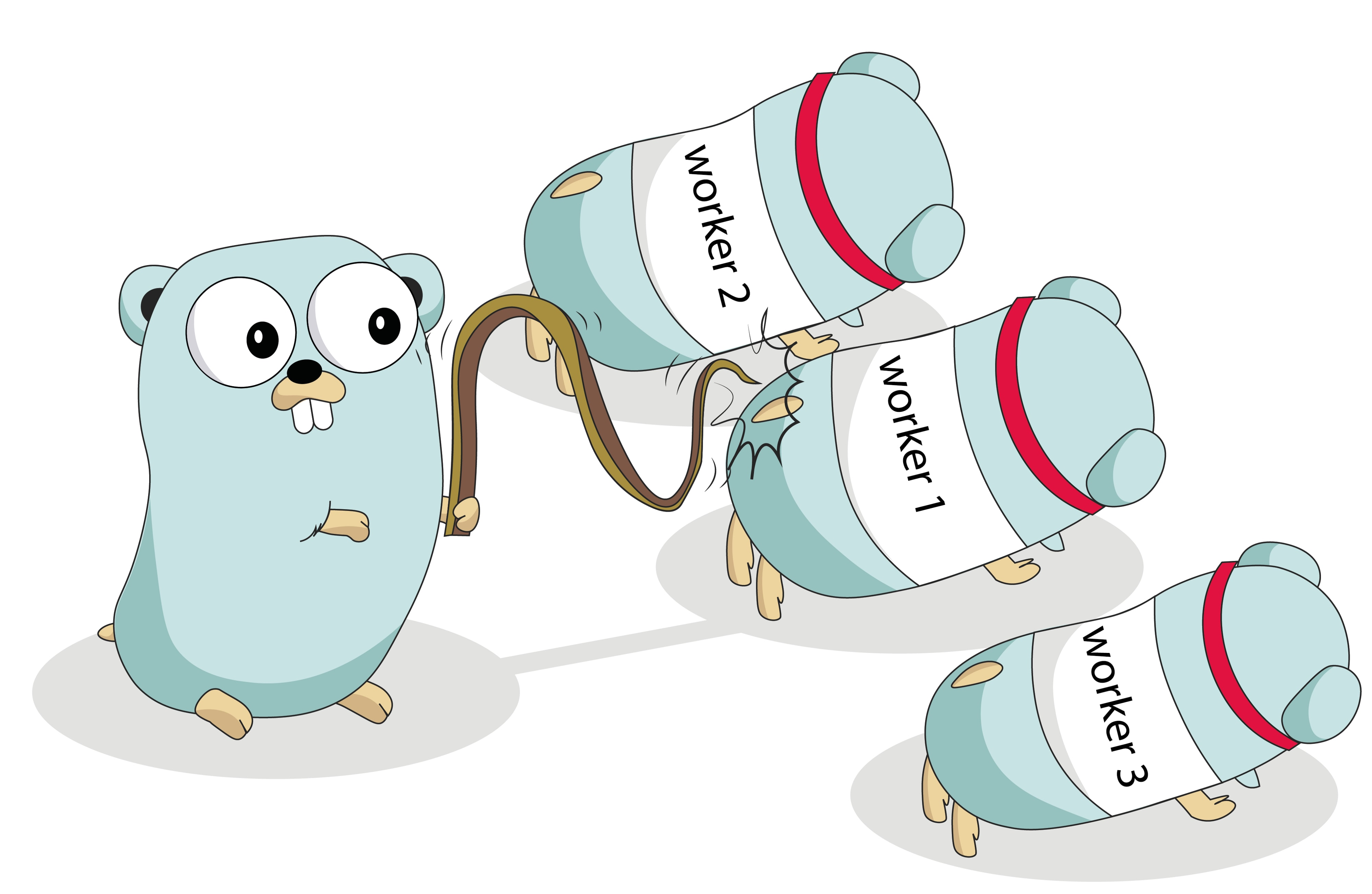
Understanding Worker Pools in Go
Worker pools are a fundamental concurrency pattern in Go that allow you to control the number of goroutines executing tasks concurrently. This pattern is essential when you need to process a large number of jobs while limiting resource consumption and preventing system overload.
In this comprehensive guide, we'll explore how to implement robust worker pools that provide controlled concurrency, proper error handling, and graceful shutdown capabilities. We'll start with basic concepts and progressively build up to production-ready implementations.
Basic Worker Pool Implementation
Let's start with a simple worker pool that processes jobs concurrently using a fixed number of workers. The basic pattern consists of three main components: a job queue, worker goroutines, and result collection.
package main

import (
    "fmt"
    "sync"
    "time"
)

// Job represents the task to be processed
type Job struct {
    ID       int
    Data     string
    Duration time.Duration
}

// Result represents the outcome of a processed job
type Result struct {
    JobID    int
    Success  bool
    Error    error
    Duration time.Duration
}

// Worker represents a goroutine that processes jobs
type Worker struct {
    ID        int
    JobQueue  chan Job
    ResultCh  chan Result
    Quit      chan bool
}

func NewWorker(id int, jobQueue chan Job, resultCh chan Result) *Worker {
    return &Worker{
        ID:       id,
        JobQueue: jobQueue,
        ResultCh: resultCh,
        Quit:     make(chan bool),
    }
}

func (w *Worker) Start() {
    go func() {
        for {
            select {
            case job := <-w.JobQueue:
                // Process the job
                start := time.Now()

                // Simulate work
                time.Sleep(job.Duration)

                result := Result{
                    JobID:    job.ID,
                    Success:  true,
                    Duration: time.Since(start),
                }

                w.ResultCh <- result
                fmt.Printf("Worker %d completed job %d\n", w.ID, job.ID)

            case <-w.Quit:
                fmt.Printf("Worker %d stopping\n", w.ID)
                return
            }
        }
    }()
}

func (w *Worker) Stop() {
    go func() {
        w.Quit <- true
    }()
}
This basic worker implementation provides the foundation for our worker pool. Each worker listens for jobs on a channel, processes them, and sends results back through a result channel. The worker can be gracefully stopped using the Quit channel.
Worker Pool Manager
Now let's create a manager that coordinates multiple workers and provides a clean interface for submitting jobs and collecting results.
// WorkerPool manages a pool of workers
type WorkerPool struct {
    Workers    []*Worker
    JobQueue   chan Job
    ResultCh   chan Result
    workerWg   sync.WaitGroup
    resultWg   sync.WaitGroup
    quit       chan bool
    maxWorkers int
}

func NewWorkerPool(maxWorkers int) *WorkerPool {
    jobQueue := make(chan Job, maxWorkers*2) // Buffered channel
    resultCh := make(chan Result, maxWorkers*2)

    pool := &WorkerPool{
        JobQueue:   jobQueue,
        ResultCh:   resultCh,
        quit:       make(chan bool),
        maxWorkers: maxWorkers,
    }

    // Create and start workers
    pool.Workers = make([]*Worker, maxWorkers)
    for i := 0; i < maxWorkers; i++ {
        worker := NewWorker(i+1, jobQueue, resultCh)
        pool.Workers[i] = worker
        worker.Start()
        pool.workerWg.Add(1)
    }

    return pool
}

func (wp *WorkerPool) SubmitJob(job Job) {
    wp.JobQueue <- job
}

func (wp *WorkerPool) GetResults() <-chan Result {
    return wp.ResultCh
}

func (wp *WorkerPool) StartResultCollector(handler func(Result)) {
    wp.resultWg.Add(1)
    go func() {
        defer wp.resultWg.Done()
        for result := range wp.ResultCh {
            handler(result)
        }
    }()
}

func (wp *WorkerPool) Stop() {
    // Stop all workers
    for _, worker := range wp.Workers {
        worker.Stop()
    }

    // Close channels
    close(wp.JobQueue)
    close(wp.ResultCh)

    // Wait for workers to finish
    wp.workerWg.Wait()
    wp.resultWg.Wait()
}
The WorkerPool provides a high-level interface for managing multiple workers. It handles job distribution, result collection, and graceful shutdown of all workers. The buffered channels prevent blocking and provide better performance under load.
Advanced Features: Controlled Concurrency
Let's enhance our worker pool with advanced features for production environments, including rate limiting, circuit breaking, and comprehensive error handling.
// AdvancedWorkerPool with enhanced features
type AdvancedWorkerPool struct {
    *WorkerPool
    rateLimiter  chan struct{} // For rate limiting
    circuitBreaker *CircuitBreaker
    metrics      *PoolMetrics
    timeout      time.Duration
}

type CircuitBreaker struct {
    failures    int
    maxFailures int
    state       string // "closed", "open", "half-open"
    lastFailure time.Time
    timeout     time.Duration
    mu          sync.RWMutex
}

type PoolMetrics struct {
    JobsSubmitted   int64
    JobsCompleted   int64
    JobsFailed      int64
    ActiveWorkers   int64
    AvgJobDuration  time.Duration
    mu              sync.RWMutex
}

func NewAdvancedWorkerPool(maxWorkers int, rateLimit int, timeout time.Duration) *AdvancedWorkerPool {
    basePool := NewWorkerPool(maxWorkers)

    pool := &AdvancedWorkerPool{
        WorkerPool:    basePool,
        rateLimiter:   make(chan struct{}, rateLimit),
        circuitBreaker: &CircuitBreaker{
            maxFailures: 5,
            timeout:     time.Minute * 5,
            state:       "closed",
        },
        metrics: &PoolMetrics{},
        timeout: timeout,
    }

    return pool
}

func (awp *AdvancedWorkerPool) SubmitJobAdvanced(job Job) error {
    // Check circuit breaker
    if !awp.circuitBreaker.AllowRequest() {
        return fmt.Errorf("circuit breaker is open")
    }

    // Rate limiting
    awp.rateLimiter <- struct{}{} // Acquire token
    defer func() { <-awp.rateLimiter }() // Release token

    // Update metrics
    atomic.AddInt64(&awp.metrics.JobsSubmitted, 1)

    // Submit job with timeout
    select {
    case awp.JobQueue <- job:
        return nil
    case <-time.After(awp.timeout):
        awp.circuitBreaker.RecordFailure()
        atomic.AddInt64(&awp.metrics.JobsFailed, 1)
        return fmt.Errorf("timeout submitting job %d", job.ID)
    }
}

func (cb *CircuitBreaker) AllowRequest() bool {
    cb.mu.Lock()
    defer cb.mu.Unlock()

    switch cb.state {
    case "closed":
        return true
    case "open":
        if time.Since(cb.lastFailure) > cb.timeout {
            cb.state = "half-open"
            return true
        }
        return false
    case "half-open":
        return true
    default:
        return false
    }
}

func (cb *CircuitBreaker) RecordFailure() {
    cb.mu.Lock()
    defer cb.mu.Unlock()

    cb.failures++
    cb.lastFailure = time.Now()

    if cb.failures >= cb.maxFailures {
        cb.state = "open"
    }
}

func (cb *CircuitBreaker) RecordSuccess() {
    cb.mu.Lock()
    defer cb.mu.Unlock()

    if cb.state == "half-open" {
        cb.state = "closed"
        cb.failures = 0
    }
}
This advanced implementation adds crucial production features: rate limiting to prevent system overload, circuit breaking to handle failures gracefully, and comprehensive metrics for monitoring performance.
Complete Usage Example
Let's see how to use our advanced worker pool in a real-world scenario with proper error handling and monitoring.
func main() {
    // Create advanced worker pool
    pool := NewAdvancedWorkerPool(
        5,        // max workers
        10,       // rate limit
        time.Second*30, // timeout
    )

    // Start result collector
    results := make(chan Result, 100)
    go pool.StartResultCollector(func(result Result) {
        if result.Success {
            fmt.Printf("Job %d completed in %v\n",
                result.JobID, result.Duration)
            pool.circuitBreaker.RecordSuccess()
        } else {
            fmt.Printf("Job %d failed: %v\n",
                result.JobID, result.Error)
        }
    })

    // Generate and submit jobs
    var wg sync.WaitGroup
    for i := 1; i <= 50; i++ {
        wg.Add(1)
        go func(jobID int) {
            defer wg.Done()

            job := Job{
                ID:       jobID,
                Data:     fmt.Sprintf("Task data %d", jobID),
                Duration: time.Duration(rand.Intn(1000)) * time.Millisecond,
            }

            if err := pool.SubmitJobAdvanced(job); err != nil {
                fmt.Printf("Failed to submit job %d: %v\n", jobID, err)
            }
        }(i)
    }

    // Wait for all jobs to be submitted
    wg.Wait()

    // Wait for processing to complete
    time.Sleep(time.Second * 10)

    // Print metrics
    pool.PrintMetrics()

    // Graceful shutdown
    pool.Stop()
    fmt.Println("Worker pool stopped gracefully")
}

func (awp *AdvancedWorkerPool) PrintMetrics() {
    awp.metrics.mu.RLock()
    defer awp.metrics.mu.RUnlock()

    fmt.Println("\n=== Worker Pool Metrics ===")
    fmt.Printf("Jobs Submitted: %d\n", awp.metrics.JobsSubmitted)
    fmt.Printf("Jobs Completed: %d\n", awp.metrics.JobsCompleted)
    fmt.Printf("Jobs Failed: %d\n", awp.metrics.JobsFailed)
    fmt.Printf("Active Workers: %d\n", awp.metrics.ActiveWorkers)
    fmt.Printf("Average Duration: %v\n", awp.metrics.AvgJobDuration)
    fmt.Printf("Circuit Breaker State: %s\n", awp.circuitBreaker.state)
}
Best Practices
✅ Do's
- • Use buffered channels for job queues
- • Implement graceful shutdown mechanisms
- • Add comprehensive logging and metrics
- • Use context for cancellation and timeouts
- • Implement circuit breakers for resilience
- • Monitor resource usage and performance
❌ Don'ts
- • Create unbounded goroutines
- • Ignore error handling in workers
- • Use blocking operations without timeouts
- • Forget to close channels properly
- • Neglect proper synchronization
- • Skip performance testing
Performance Considerations
Key Optimization Areas:
-
1.
Worker Count: Set based on CPU cores and I/O characteristics. Use runtime.NumCPU() as a starting point.
-
2.
Channel Buffering: Size buffers appropriately to balance memory usage and throughput.
-
3.
Job Granularity: Avoid extremely small or large jobs. Find the right balance for your workload.
-
4.
Memory Pooling: Use sync.Pool for object reuse in high-throughput scenarios.
Worker Pool Patterns Comparison
| Pattern | Use Case | Complexity | Performance |
|---|---|---|---|
| Basic Pool | Simple batch processing | Low | Good |
| Dynamic Pool | Variable workload | Medium | Better |
| Priority Pool | Task prioritization | High | Excellent |
| Advanced Pool | Production systems | Very High | Optimal |
Conclusion
Worker pools are a powerful pattern for managing concurrent operations in Go applications. By implementing controlled concurrency, proper error handling, and monitoring capabilities, you can build robust systems that handle high loads efficiently while maintaining system stability.
Remember that the key to successful worker pool implementation is finding the right balance between concurrency, resource utilization, and system reliability. Always profile your applications and adjust parameters based on your specific workload characteristics.
"Concurrency is not parallelism, but it enables parallelism." - Rob Pike